Headless CMS Sounds Modern, But It Hurts Half of Our Clients
November 3, 2026

Headless CMS Sounds Modern, But It Hurts Half of Our Clients
Headless became the answer to a question nobody asked. A client shows up with a simple need, a marketing site, a blog, a few landing pages, and somehow the conversation ends up on Contentful, Sanity or Strapi with a Next.js frontend. It sounds serious, it sounds scalable, it sounds like we know what we're doing. The problem is that for a good share of those projects headless isn't an upgrade, it's a more expensive, more fragile version of something WordPress did better and cheaper.
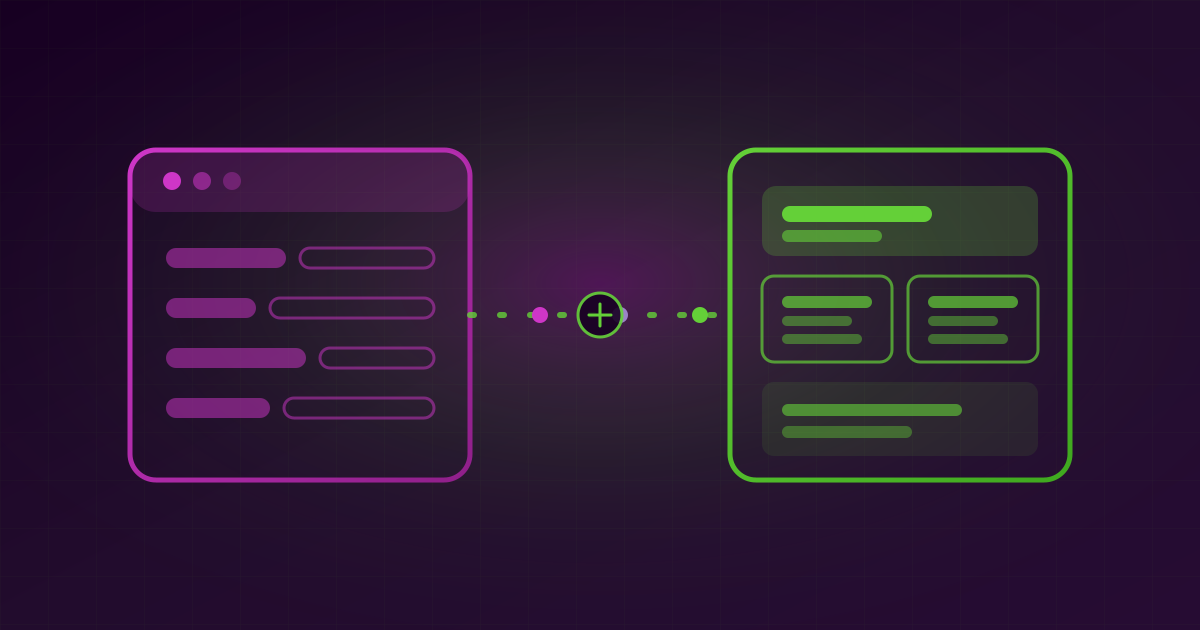
Let's be clear, headless CMS is a legitimate architecture. Decoupling content from presentation makes sense when the same content feeds multiple channels, web, a mobile app, a kiosk, a digital screen in a storefront. In that case a single source of truth is a real advantage. But that's a different problem from "we need a nice site marketing can edit itself." And that second problem is most of the work in an agency.
Where headless actually runs up the bill
The first rule nobody mentions in the sales meeting: headless doesn't kill your WordPress costs, it doubles them. With decoupled WordPress you still pay for the admin, the database and the server, and on top of that you get a second frontend stack that someone has to build, host and maintain. The industry numbers circulating through 2026 point the same way: for a site whose only purpose is marketing, a headless setup costs roughly two to three times more in year one, and the break-even on cost alone arrives only after two to three years, if it ever does.
The second, quieter cost is the editorial experience. This is where headless projects tend to die silently. In WordPress an editor sees the page, clicks, changes the text, publishes. In a typical headless setup the editor types content into abstract fields and hopes it renders correctly on the frontend, while a working preview is something you build separately and often doesn't behave as expected. Marketing that used to change a banner on its own now opens a ticket with the dev team. That's not theory, it's a recurring pattern.
The third cost is operational. Headful WordPress is one thing that either breaks or doesn't. Headless is a chain: CMS, API, build, frontend hosting, CDN, webhooks that trigger a deploy when an editor publishes. Every link is a new point of failure and a new monthly bill. For a two-person team that isn't flexibility, it's a burden.
The market itself is flashing a warning
If you think headless is a mature, settled space, look at who keeps changing owners. Contentful, the platform that practically defined headless CMS as a category, is no longer an independent company. Sanity raised an $85 million Series C in May 2025 and stayed private. That isn't just industry gossip, it's information for the client. When you tie your company's content to a SaaS whose pricing and ownership keep shifting, you're buying a risk you simply don't carry with WordPress. Open source on your own server doesn't rewrite its price list overnight.
When headless does make sense
I'm not against headless, I'm against headless as the default. It makes sense when you have genuine multi-channel needs, when you have a dev team that can maintain it, when frontend developer velocity matters enough to justify the premium, and when there's enough content that treating it as a structured product rather than pages is worth it. If you hit three of those four, the conversation is legitimate. If you hit zero or one, someone is selling you an architecture, not a solution.
In practice we build both, tourism, e-commerce and brand sites, and the pattern is clear. A project centered on content and editing almost always lives better on a well-configured classic CMS. A project centered on a product that lives across multiple channels earns headless. Everything else is fashion dressed up as a decision.
The most honest test is a single question: who's maintaining this a year from now, and will that person be able to change the homepage on their own? If the answer isn't convincing, headless isn't progress, it's debt you'll only feel later.
Related:
- Migrating to a New Framework Rarely Pays Off, and Here's How to Prove It
- Why We Charge for a Redesign That Looks Almost the Same
Not sure whether your project needs headless or a classic CMS? Contact us and we'll walk through the real cost before writing a single line of code.
It takes 10 seconds to request a quote.
No strings attached.